Descriptions of mobility exhibition boards [ENG]
For years, the local governments of the Poznan Metropolitan Area have been jointly planning and carrying out initiatives that address challenges extending beyond administrative boundaries. Thanks to this cooperation, it is possible to implementprojects of a scale and significance that would be much more difficult for individual entities to carry out on their own.
This metropolitan cooperation has resulted in the integrated projects Climate* and Mobility**, which are being implemented with the support of European funds. These initiatives are part of a shared vision for the development of the Poznan Metropolitan Area, carried out in phases. The funds secured enable the implementation of projects that improve the quality of life for residents, increase resilience to the effects of climate change, and encourage active travel. We are now presenting the results of the first phase of these projects.
Climate action primarily involves improving water retention and land-use management to protect water resources and enhance the water balance in the municipalities affiliated with the Poznan Metropolitan Area. They also involve stabilizing the microclimate, maintaining a high level of biodiversity, and reducing flood risks - both from rivers and from torrential rain. The implementation of these investments also leads to an increase in green space through the creation of new green squares and pocket parks. At the same time, these actions help reduce the risk of drought and the occurrence of so-called urban heat islands. New green spaces are not only additional plantings, but also areas designated for recreation for residents.
The Mobility Project aims to integrate transportation systems and improve transportation accessibility within the municipalities that make up the Poznan Metropolitan Area. The activities planned as part of the project contribute to the development of pedestrian and bicycle infrastructure and integrated transit hubs, as well as to reducing dependence on private transportation. The implementation of these tasks has a positive impact on the environment through, among other things: reducinggreenhouse gas emissions, lowering noise levels, and reducing air pollution. This leads to increased competitiveness of public transit, the creation of new Park&Ride and Bike&Ride facilities for residents, and improved travel comfort and safety, including for people with disabilities.
* „ Support for Small-Scale Water Retention and the Development of Green-and-Blue Infrastructure in the Poznan Metropolitan Area – Phase I”
** “Sustainable Urban Mobility in the Poznan Metropolitan Area – Phase I”
“Sustainable Urban Mobility in the Poznan Metropolitan Area – Phase I”:
Poznan:
A new cycle path has been built in downtown Poznan along Estkowskiego, Małe Garbary, Wolnica, and Solna streets. The infrastructure investment has improved the connectivity of the metropolitan cycle network by linking routes located along the Warta River and Kościuszki Street.
Poznan and Czerwonak:
A new pedestrian and cycle bridge has been built over the Warta River, connecting Czerwonak (near the AKWEN Marina) with Poznan’s Umultowo district. As part of the infrastructure investment, a woodland path was also created in the area ofNadwarcianska and Bozywoja streets in Poznan. The crossing serves as an important transportation route and a convenient starting point for trips to the Zielonka Forest and Dziewicza Góra. In subsequent phases of the project, the pedestrian and cycle bridge will be connected to the cycle networks in Czerwonak and in Poznan via the Wartostrada.
Czerwonak:
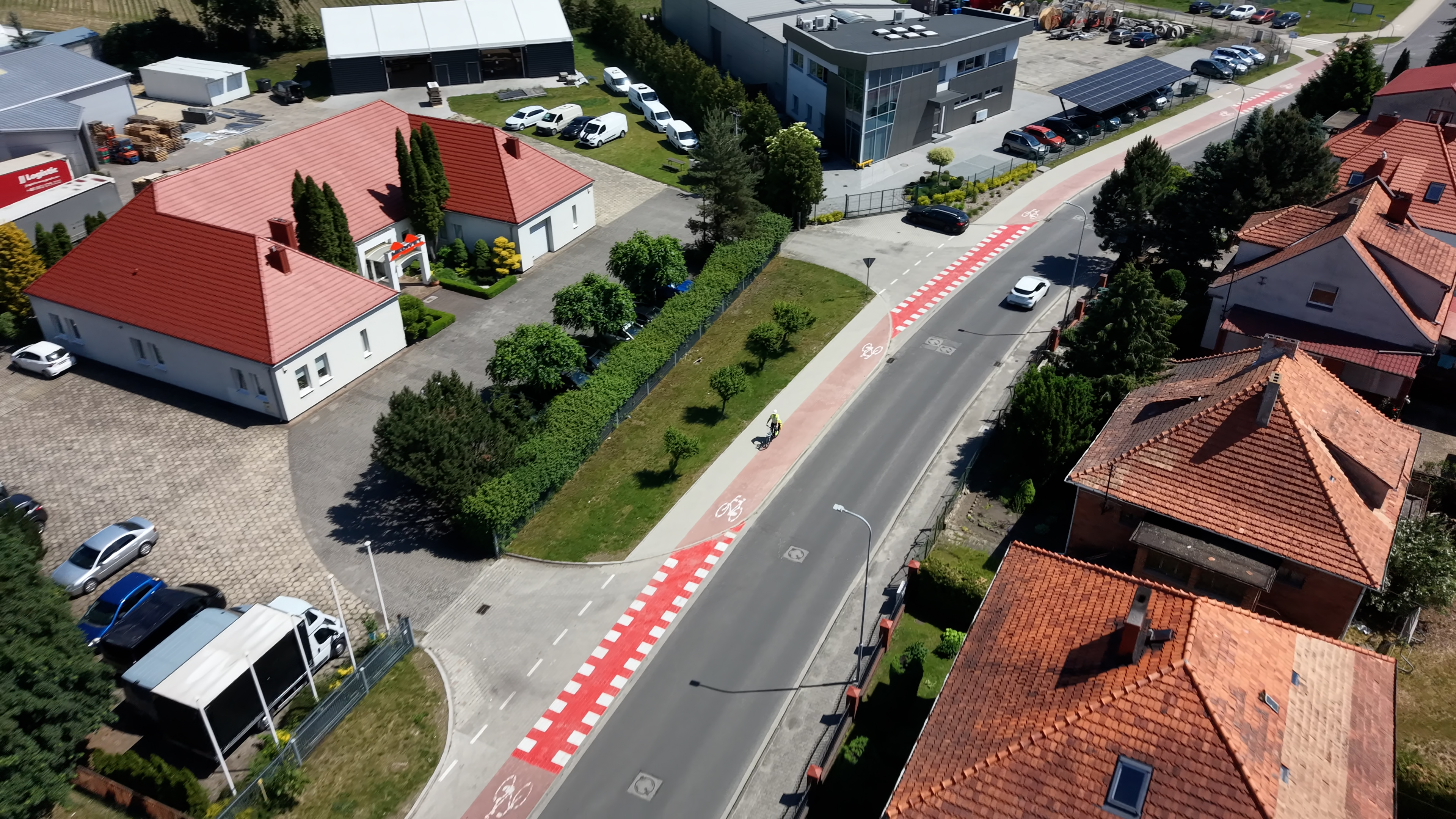
A new cycle path has been built in Czerwonak along the section from Gdynska Street to Zrodlana Street. This infrastructure investment along the busy Lesna Street (near a school and a sports hall, among other facilities) has significantly improved safety for pedestrians and cyclists. Thanks to this infrastructure expansion, access to the Czerwonak railway station and the Park&Ride and Bike&Ride lots has also been made easier.
Srem:
The cycling infrastructure has been expanded by connecting cycle paths along Szkolna and Pilsudskiego Streets. This section links it to the existing cycle network. The investment, which also included the construction of a Bike&Ride facility, provides residents with safe and convenient access to the integrated transport hub on Stary Rynek Street, as well as Elementary School No. 2 and the shopping center.
Szamotuly:
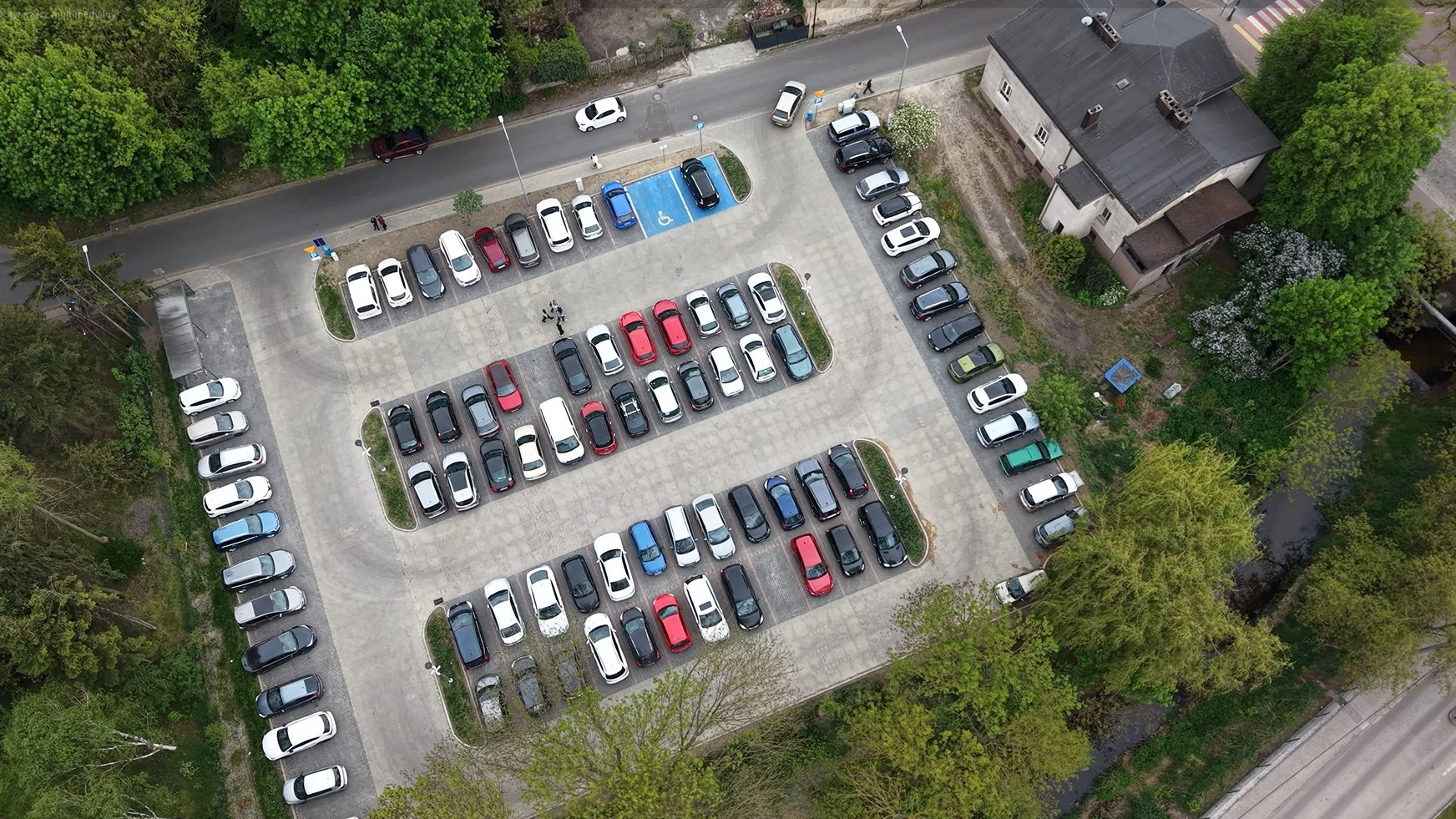
An integrated transport hub has been built on Młynska Street. The infrastructure investment included, among other things, the construction of Park&Ride and Bike&Ride facilities, energy-efficient lighting, and a smart system that provides information on parking availability. The action is a continuation of the City and Municipality’s activity to promote sustainable mobility, encouraging residents to conveniently switch from cars to public transportation and cycling.
Murowana Goslina:
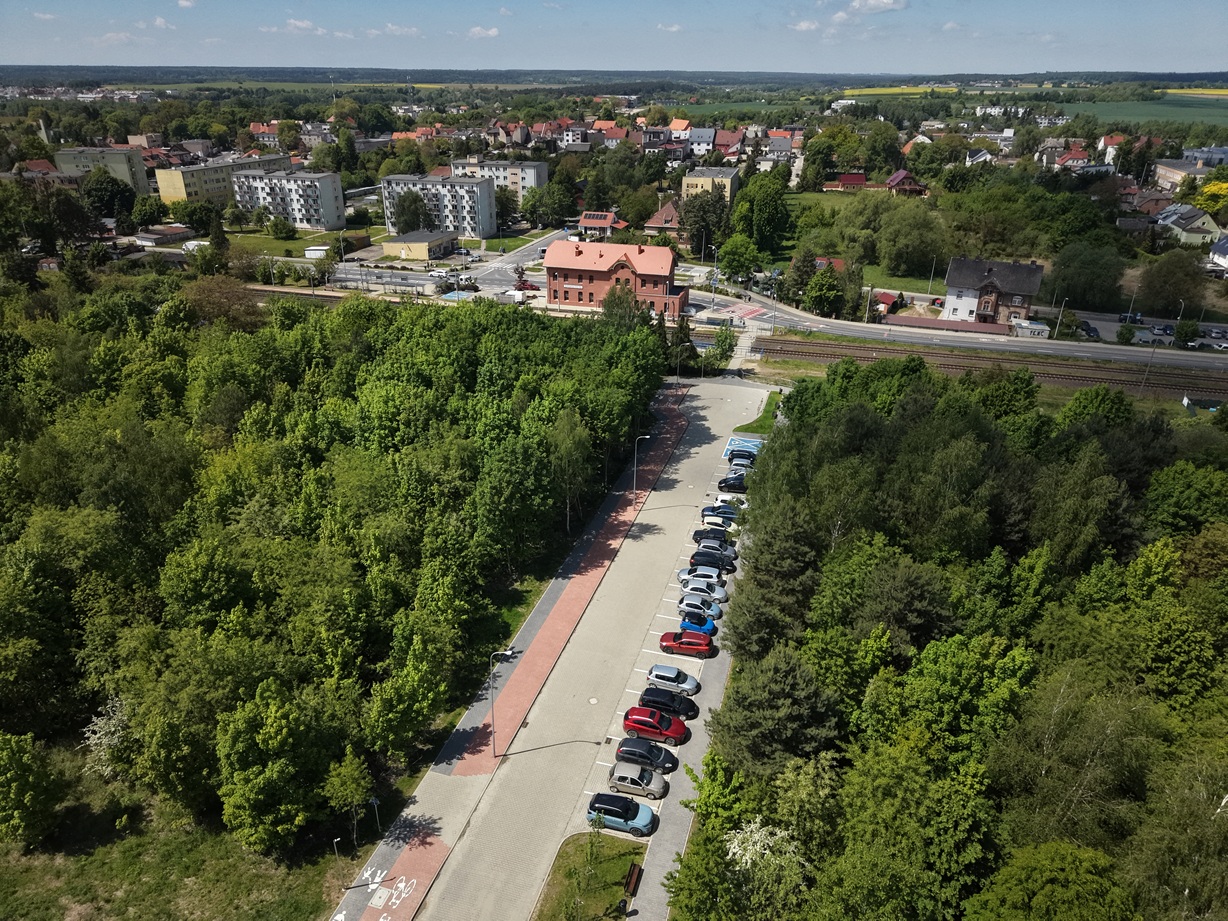
The integrated transport hub on the east side of the Murowana Goslina railway station has been expanded. The infrastructure investment addresses the shortage of parking spaces by offering travelers new Park&Ride and Bike&Ride facilities with cycle access.
Suchy Las:
A new cycle path has been built in the central part of the municipality (the section between Borowkowa Street and Nektarowa Street). This infrastructure investment represents a significant extension of the existing cycle path along Obornicka Street, thereby safely connecting key centers of public life and economic activity in the municipality. The completion of this investment also paves the way for the further expansion of a cohesive cycling infrastructure, which will ultimately extend all the way to Pawlowicka Street.
Tarnowo Podgorne:
The new cycle path connecting Jankowice and Rumianek is an important addition to the local transport network. The direct connection between the two municipalities has eliminated the need to take a detour. The infrastructure investment, carriedout as part of Phase I of Public Transportation Integration provides residents with safe and comfortable cycling routes.
Oborniki:
As part of the expansion of the integrated transport hub, a ramp was built at the railway station in Bogdanowo. The new infrastructure eliminates existing architectural barriers, enabling people with limited mobility, parents with strollers, and travelers with luggage to use public transportation independently, safely and comfortably.
Metropolia Poznan:
As part of the activities carried out under the project, among other things: an educational portal was launched, materials for schools were developed, an e-learning module was prepared, and art contests for children and youth were held. Metropolitan Mobility Picnics were organized in all municipalities covered by the project. These activities collectively raise awareness of the benefits of low-emission public transportation, promote road safety, and encourage active travel - whether on foot or by bicycle - throughout the metropolitan area.
Opisy plansz w języku polskim